Monday, November 25, 2013

Emma Flower Pattern Tutorial #1


how to make a flower headband

When I put together the Emma Collection, I made a couple flower headbands that I wanted to share the patterns with you! The flower headband pattern is available on my website for free in pdf format. There are printable pattern pieces for the flower pieces as well as an elastic size chart. The free flower headband pattern pdf can be found here.


Also in the Emma collection are the Fitted baby shirt pattern

and the Baby Leggings Pattern

and the long sleeve a line baby dress pattern


Okay, on to the free flower pattern. :)

1. Using Pattern, Cut one circle and one rectangle.
The pattern pieces can be found here.

2. Use the hand needle and thread to sew around entire perimeter of the circle piece. Sew each stitch about 1/2” long and about 1/8” from the edge of the fabric. Do not tie the ends of the thread.
Another shot of step 2.

3.Pull the ends of the thread to ‘cinch’ the circle into a “puff”.

4. Tie the thread ends together while they are still tightly cinched.

5. Adjust the puff so that the cinched section is on the top center of the puff. 
6. Cut one rectangle using pattern piece. Fold in half as shown and sew the open ends together.  Knot the ends.

7.Fold the strip inside of itself like above. Make sure that the sewn ends are hidden on the inside.

8. Sew the open edge closed. Sew with 1/2” stitches that are about 1/8” from the edge. Don’t knot the ends.

9. Cut slits on the folded edge. Cut them about 1/2” apart. Be careful not to cut the thread.

10. Pull the threads tight to cinch the strip into a flower.

11. Tie the ends of thread and adjust the flower to lay flat.

12. Place a dab of hot glue onto the center of the “puff”.

13. Place the flower on top of the hot glue. Allow the glue to cool, then sew one or two stitches through both pieces and tie securely. (I’m sorry there isn’t a photo of this).

14. Place a dab of hot glue into the center of the flower.

15. Fold a couple loops (petals) over the hot glue to hide the center. This is optional depending on your preference.

16. If you are making a headband, cut the elastic to appropriate length. Find elastic measurements on pattern piece.
The headband measurements can be found here.

17. Overlap the ends of elastic 1/2” and sew them together.

18. Turn the entire piece upside down. Place a strip of glue where the elastic will lay if you are making a headband.

19. Put the elastic on top of the glue. Press it firmly into place.

20. Cut a strip of scrap fabric that is approx 1 x 2”. 

21. Carefully place the hot glue onto the elastic strip. Press firmly into place and trim the edges of the scrap piece to fit the head piece.

Make a few more to match more outfits, then check out the rest of the Emma Collection

flower headband pattern
Easy peasy free flower pattern.

Wednesday, November 20, 2013

Long sleeve baby dress pattern - just in time for winter!

Can a long sleeve baby dress pattern save your baby from freezing at the holidays? Yes it can! 

There is nothing that is more irritating than walking around the stores or sewing pattern isle while looking for a Christmas dress for my baby. Seriously, don't clothing manufacturers know that it is WINTER time? Yes, baby arms are cute, but they are much cuter when they aren't blue. Does anyone actually take the cardigan off of their baby at Christmas time? Or the undershirt? I think not. Yet, I am still finding mostly short sleeves or sleeveless Christmas baby dress patterns.


After deep thought and a smidge of frustration, I decided that I wanted to make a new baby dress pattern so that my baby would have something decent to wear this holiday season. There were many options that I considered with the a-line baby dress pattern, but the main focus was long sleeves. I knew that if this dress was a hit, that I would want to have short sleeves too, so I added those as well to the design. I completely omitted the thought of having the dress be sleeveless. If I have people who ask about it though, I might make a knit sleeveless dress in the summertime.

A line baby dress pattern


I wanted a dress that was fitted around the bodice, and flared out below the waist. I also knew that I wanted something longer than the average baby dress. I think it's interesting that dresses in the store are sleeveless AND too short. Leggings and tights are cute, but the main attraction should be the dress, so lets cover a bit more leg.
long sleeve baby dress pattern

short sleeve baby dress pattern

I had been working with knit fabrics a lot lately so I thought it would be fun to have a knit baby dress. You usually see woven dresses this time of year, so this would change up the norm a bit. Not only that, but when I started to imagine a neckline for this dress, I loved the idea of doing a pull-over style that had no buttons, zippers or snaps. In fact, you could almost call this dress a t-shirt baby dress (although a bit fancier).

t shirt baby dress pattern

Lets get started in the design process.


The first thing that did with this pattern was visit my onesie pattern and fitted shirt pattern. I pulled a great neckline from them and also my superb sleeve length. 

best baby dress pattern

Then I looked at my baby jumper pattern to nab the length from, but quickly decided that it wasn't long enough for this long sleeve baby dress design. I love the baby jumper pattern, but it is meant to be worn with leggings and ruffled diaper covers. I wanted a dress that I could put on my baby over top of winter tights without worry about the crotch seams showing. So I made the length longer and made the width a tad wider. The length of the new long sleeve baby dress is about knee length on most babies.

long baby dress sewing pattern

A word about sleeve length

I love the length of my baby dress sleeves. Recently, I put a store bought shirt on Claire and she wore it to church. The whole time that she was wearing the shirt, I had to keep pulling the sleeves down because they were too short. Many people at church ask me each week if Claire's outfits are homemade (which they usually are), so I had to make sure to tell people that the shirt was NOT homemade. I was a bit embarrassed that she was wearing something that fit so terribly.
Moving on.
covers the rump dress sewing pattern

The hem of the long sleeve baby dress couldn't be easier or neater. Simply fold, press and sew.

A word about stitches. 

I have been reading a lot of tutorials that talk about using a double needle while sewing knits. It is a great idea. I did mention that in my tutorial in a few places. However, a standard zig-zag stitch works great. If you prefer the look of a single line, try to use an elastic stitch (which I also mention in the tutorial). I also love using my serger and use it for most of my knit projects, so I also included in the tutorial where would be appropriate to use the serger if you had one available.

Easy baby dress pattern


Long sleeve baby dress pattern sizes.

The sizes in this pattern are so versatile. They are accurately sized from newborns up to 36 months based on current U.S. clothing size trends (in English, this means that the pattern is the same size as your baby's store bought clothes sizes). The reason that I say they are versatile is because of the 'knit factor'. Because knits are so stretchy and giving, your baby can wear the long sleeve baby dress for multiple sizes. Your baby can typically wear a size below and a size above their current size when working with this pattern. It has the flexibility to allow you to extend your baby's wardrobe for longer periods.

how to make a baby dress

I really liked making this sewing pattern. 
It was the end of my Emma Collection (other than the free flower headband patterns that I still need to do) that I have been working on recently. Sometimes I am sad to be done with a project as I am having so much fun with it, but this one was not the case. I was very glad to be done and ready to give it to my customers. I have had multiple requests for an a-line baby dress pattern that featured long sleeves, so this was perfect for those that asked as well as for multiple mammas who are making holiday dresses for their little ones.
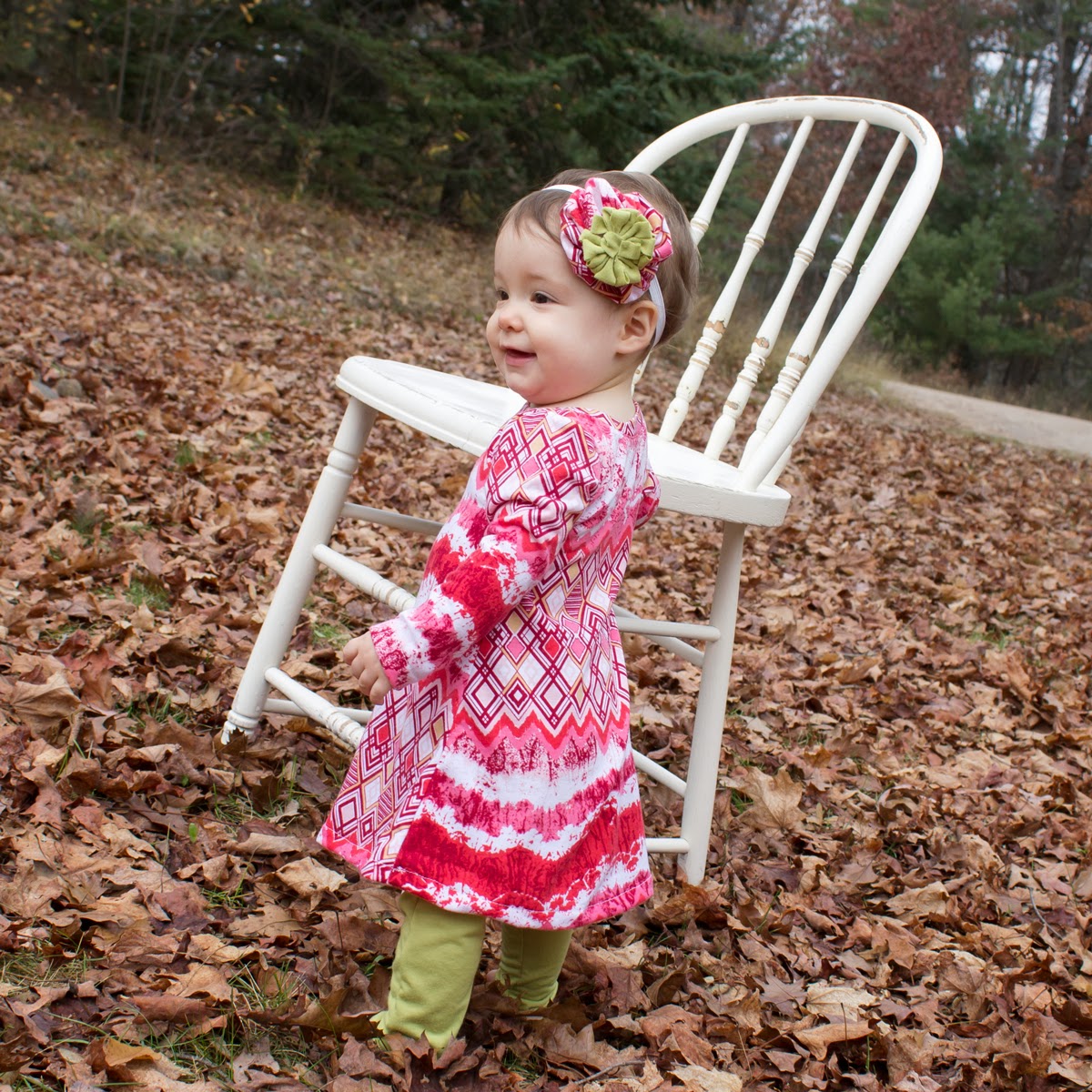
Soon to be added to the Emma collection will be free patterns of the flowers that I used for Claire's headbands. Isn't she a beautiful model?

beautiful baby dress sewing pattern


Thank you for joining me to read about my design process for the long sleeve baby dress pattern. I hope that it inspires you to be creative! Check out the long sleeve baby dress pattern now!


Thursday, November 14, 2013

Best Baby Leggings Pattern

The best baby leggings pattern is finally here. It features 8 sizes from newborn to 36 months. All of the pattern pieces are printable from a home printer. There is not any scaling necessary as the pattern pieces are drafted professionally to size. There are optional ruffles and a rear extender for cloth diapers. Sound too good to be true? It's here! Read on!!

baby leggings pattern


When I first decided that I wanted to make a legging pattern, it was after multiple people had asked me to design them. At the time of the first requests, I had an entire drawer filled with leggings and dresses. I wasn't about to make any more. However, this last box of baby clothes that I got out for Claire left me a little skimpy in the baby legging department. Actually, all of the departments were skimpy. In the 12 month size that I just pulled out, she had 3 onesies, 1 dress, 2 - one piece pajamas (this will be something on my to-do list I think), a couple pairs of socks and a couple stretched out pairs of pants. What was I thinking when I kept those?!

I got to work right away making shirts for Claire out of t-shirts that hubs brought home for me. He is a web designer and artist for a web company that is connected to a t-shirt design shop so he has unlimited supply of messed up shirts that need to be 'recycled'. Yay for me!

cloth diaper baby leggings pattern

After I got a few onesies and long sleeve shirts done, I whipped up a few baby jumpers. After I got the baby jumpers done, I realized that IT IS WINTER. What was I thinking?

It was time to design some baby leggings.
ruffle baby leggings pattern

Something that had been irritating me about baby leggings in the previous size, was the lack of room in the 'rear' area. I exclusively cloth diaper my babies, which makes it hard to find proper fitting attire in a 'disposable' world. I know that some of my customers are NOT cloth diaper mammas though, so I had to come up with a solution for both, cloth diapered and non-cloth diapered rumps. The “Rear Extender” was born. At first, I added WAY too much room for the cloth diaper. The leggings looked saggy at first. No thanks. Leggings are supposed to be form fitting. After a couple tries, I had it right. I love how the baby leggings fit over cloth diapers now. They are smooth and comfortable without adding any unnecessary room to the thigh area. The Rear Extender is of course an optional feature of the baby legging pattern, but it is necessary for us cloth diapering mammas to add to our baby's wardrobe.
Extra room in the butt leggings pattern

Another thing that made me have to do a bit 'extra' designing, was the fact that t-shirts aren't always suitable for a one piece legging pattern. I needed side seams. That was a challenge for me as I hadn't incorporated side seams in any other pants or shorts pattern before. I love what I came up with though and you will too. The pattern piece that I designed has the option of being one piece OR two pieces so that you can have side seams. This is huge. If you have yardage fabric, just whip out a few one pattern piece leggings...but if you are recycling and need a bit more wiggle room, use the two piece pattern with side seams!
I love ruffled leggings

The other reason that I wanted side seams was that I wanted ruffles. Since winter was upon me, I wanted my darling to be outfitted adorably, so ruffles were necessary. Yet, to sew a ruffled diaper cover, would be more work and just another thing to add to her drawer. Why couldn't I simply add the ruffles to the rear of the leggings? I went to work pondering, measuring, drawing and sewing. Finally, I had the perfect solution for all sizes that are included in this sewing pattern. The side seams are perfect for adding ruffles and you'll love the placement of the ruffles on the baby leggings pattern.
baby leggings rock


As I was in the designing process and finally had my pieces drawn up, I did a quick search online for baby legging patterns. I was immediately overwhelmed with multiple patterns. They ranged anywhere from free to $20 a piece for the pattern. I was a little bit down after I saw all of the competition for a pattern. I felt like I had wasted my time to design something new when it had already been done. I left my computer and my designing for a few days. When I got out of the 'funk', I looked at the patterns online again. They were missing key components that mine was offering. 
make your own recycled baby leggings

The easiest and most obvious 'lack' in the patterns that I found online for baby leggings, was that there were few printable pattern pieces. I don't know about you, but when I want to sew something, it's because I don't already have it. I can't take apart a pair of pants that I don't have to make a new pair. That's silly. I also hate to 'resize' anything. It never blows up to the appropriate size as it should. Yet, many of those patterns suggested doing that. I am so proud to be able to offer you professionally drafted pattern pieces with all of my sewing patterns, especially my baby leggings sewing pattern.
how to recycle a t shirt

Overall,  I had a great time designing these baby leggings. The sewing pattern rocks and I can't wait to share it. My love for dresses will extend into the winter months because of them. I want to try to make some fleece leggings too. Doesn't fleece baby leggings sound like the coziest things ever? I think it would end up pilling around the legs after a while if the baby is crawling or rolling. Either way, I might have to make a few before Christmas!

Christmas gift baby leggings

Thank you for joining me today to read about how I designed this pattern. I hope that my customers and readers enjoy my design stories. I love to design and it is so much fun to tell you about it.
Cloth diaper baby leggings pattern

Monday, November 11, 2013

How to make chicken feet broth

I love to eat. My kids love to eat, and so does my husband. We eat very well for a family of 8. In fact, I will quite often make meals that are so huge that I have to find families to give dinners to. One of the reasons that we eat so well is because God has blessed me with a mother who'll try almost anything. I have learned well from her. Since my husband is also great at trying anything, I am always open to new ideas. My latest attempt at trying something is sure to be one that I will repeat: Making stock from chicken feet. I know that the first thought is “OH MY GOSH, REALLY!?!!?”, but when you get past that, it's smooth sailing.

cook chicken feet!
Claire is one happy and well fed baby!
I raise my own chickens and butcher them myself. I have read that chicken feet are the 'greatest thing for broth', but because I was unclear on how to clean them, I threw them in the carcass pile. When you butcher 25-30 chickens at a time, that's a lot of chicken feet that could be saved, yet because of my uneducatedness, I simply tossed them to the coyotes.
My best friend helping me butcher chickens in 2013

Chicken feet are very high in chondroiton and gelatin. If you have any joint pain or arthritis, you KNOW what I am talking about. This is for you.

I will typically make one to two chickens on an average week. Each chicken gets about 3 meals out of it.
  • Day one I will roast the chicken or put it into the crock pot. That night, I will cook the bones ALL NIGHT (maybe throw in a neck, or a carcass that I saved in the freezer too) in the crockpot. In the morning I have a delicious stock that I save in the fridge. 
  • Day two: I make some sort of chicken soup or meal with the stock. You can use chicken stock more ways than you think. Did you know that chicken stock in grits with garlic and thyme make the most delicious 'breakfast for dinner' that you ever had? Just had that for dinner tonight. mmmm, I wish there were leftovers. 
  • Day three: I use the left over chicken pieces from day 1 to make something like a pot pie (great for left over potato soup from day 2) or chicken Alfredo, or chicken salad sandwiches.

Of all of these three days, I still end up wishing that I had more stock. If you have to add water to a base (stir fry, soup of any kind, scrambled eggs, etc), you should be adding stock. It makes the most incredible food that you can put into your mouth. Not only good tasting food, but highly nutritious as well.
Recently, I had a friend talking about how she had multiple bags of chicken feet to make stock out of. I had already read that they were awesome for that purpose, and when she expanded on the subject, I KNEW that I needed to try it. When she saw that I was interested, she gladly gave me 10 lbs of chicken feet. TEN POUNDS! I thawed them and quickly went to work.
These chicken feet were directly from the butcher that she takes her home-grown chickens to. Since I butcher my own, I will have the extra step of blanching them first to do anything with, but I wanted to share my first experience with you.
Since there were 10 lbs, I decided to make the chicken feet in two separate batches of stock. The first batch went right into the pot. The second batch I baked for an hour and added vegetables and seasoning to.
The first batch that went into the pot turned out to be okay. It was rich tasting, but it smelled terrible. I was expecting it though. I don't know if you have ever cooked a chicken all night without seasoning....you wake up to a dreadful smelling meat. I hate it. I almost always add a bay leaf and celery to my chicken bones when I cook them all night to avoid the scent.
The nice thing about the first batch was that it was quicker to get into the pot.

The first thing that I did was thaw the chicken feet. Then I set up my working station.

From left to right: Junk Container, Cleaned chicken feet bowl, un-cleaned chicken feet

If I was going to butcher my own chickens and start from the beginning, I would pile all of the chicken feet into a 5 gallon bucket. Then I would pour boiling water over them. I would put in dish soap and stir. Once it was cooled enough to touch, I would take one foot at a time and peel the yellow skin off of each foot. At that point, I would rinse them and freeze them until a later date.

Since these ones came from the butcher though, the chicken feet are almost cleaned off already.
Each chicken foot has a soft pad at the bottom. For some reason, this pad gets a bit gnarly at times. If it's gnarly, take a sharp knife and slice part of the pad off to cut off the offending gnarliness. Put the nasty part in the “junk container”.


The next step is the toenails. I have read mixed things about them. Some people say “why not leave them on if you are going to strain it later anyways?”. Other people say, “cut the nails off and open up the cartilage at the same time for a more wholesome broth”. I went with the latter and chopped them off. This was the hardest part for me. Not only was it a daunting task until I got the hang of it, but the chicken feet resemble human hands too much. I might skip this step in the future.This was not an easy task until I figured out the best way. When slicing off the end of each toe, simply cut at an angle, just beneath the toe nail. This will keep your blade sharp and will go faster than chopping through any bones. Put the toenails in the “junk container”.


Put all of the chicken feet into a large bowl and rinse. Rinse. RINSE.


At this point was where I deviated both times. The first time, I simply put the feet into the pot.
Place the chicken feet in a large pot. I am using my pressure canner/cooker for this. Mine is a Presto 23 quart canner. I love it. It is aluminum and although I was worried at first about cooking in it, I am moving past that. Place the bottom rack inside, put the chicken feet on top and fill with clean water until the canner is 2/3 full.


The second time, I put the feet on a cookie sheet and placed them in the oven at 350 degrees. I baked them for an hour.

Overall, I liked the flavor better of the ones that went into the oven to bake. The broth also has more color and seems to be richer. I will probably do this method more than "straight pot" chicken feet method.


Bake those chocken feet for about an hour at 350 degrees. It will smell like a roasting chicken. Pull the legs out after an hour. The color will be slightly browned and the skin will look translucent. Chicken fat will also be on the cookie sheet (rather than in your stock...woot!).


Place the chicken legs into the pressure canner/cooker. Add an onion or two, celery, bay leaf and thyme. Also add a few tablespoons of vinegar. Vinegar will pull out more calcium from the chicken bones and put it into the stock. Put the lid on and place the regulator cap on your pressure canner/cooker. 
Turn heat to high and keep watch.


When the pressure gets up to 15 lbs, hold it there for 15-20 minutes. I have seen other recipes that say to cook at 15 lbs of pressure for 10 minutes. I personally like to a little bit longer. Just because.


After 15-20 minutes, shut off the heat. Wait until the pressure canner completely de-pressurizes before touching. When you remove the lid, this is what the stock will look like. I have seen that some people remove the top layer of fat....and some people keep it. It's personal preference. Do skim the scum off of the top though. It is full of impurities that you don't want in your stock. 


Strain the stock and put into freezer bags when it is cooled. You can also can this stock easily by following your pressure canner directions. Only can meat products with a pressure canner to manufacturer directions. NEVER try to wing it. *Ha ha...wing it.....or 'foot' it*.
I hope that you enjoyed this tutorial! Thanks for joining me!

Saturday, November 9, 2013

Why do you remove your hat at the table?

On Thursday nights my husband and I host a parenting class at our home. Somehow, throughout the conversation this week, we were stuck on “why we make our kids remove our hats at the table”. I quickly said that it was a respect issue and my husband agreed. However, there were some points that were made which made me realize that I needed a reason WHY it was for respect. Because of time factors, we had to leave the discussion for a later time. I have had time to think and research this subject, so here is my discovery.
In ancient times, men bowed to others when greeting them as a sign of respect. There was also a custom of kneeling and kissing the hand. Something that has been all throughout history, however, is the removal of the hat as a term of respect or cleanliness. If you were a warrior with a mask or helmet on, you would have to remove your head covering when entering a town or village so that people knew who you were. If you met someone on a road with a helmet or facial covering, you would remove it for your own safety as you would probably be attacked otherwise. People would remove hats and head coverings upon entering a dwelling after working in the fields as they would be very dirty from the grime of the day. There would be the typical “washing up” before supper which included removing your hat. You certainly wouldn't want to drop cow poop in your soup.
Sometime in the early 1800's, men started to remove their hats when going indoors or when speaking to women and tip their hats even if a woman looked at him. It was a social custom. He could have been flirting, or simply being polite. Personally, I think that this is a romantic view of respect. He would also tip his hat to other men or a clergyman or religious figure to recognize them publicly. In the 1960's men stopped wearing hats (as cowboy hats) and the social custom was much lost. Some and very few men tip their heads (without hats) in response to this tradition, but the custom has been forgotten by a large percentage of the country.

This is an excellent article on hat etiquette: http://www.traditioninaction.org/Cultural/A045cpCivility_Hats.htm

In the early church, head coverings were required for women. It was tradition. In the bible, when Paul talked about the head coverings, he was referring to traditions and social requirements. After reading some amazing (and lengthy) articles on the tradition of head coverings for women in the church, I can sum them up in English: As a follower of Christ, you need to act like it. If people see you as a follower of Christ, but you are causing others to stumble because of ignoring social requirements or common traditions, it's a problem that you don't need to have. Back then, because of strict Jewish traditions, it was required to wear a head covering if you were a woman or you could be killed. That's a big problem. To further explain this type of “social requirement” in our society, think about this word picture: Lets say that you want a job at a professional establishment and you go to the job interview. The social requirement is that you 'dress for success'. However, you do not think that the way you dress should determine whether you get the job or not. When you get up that morning of the interview, you purposefully eat garlic bread so that your breath is 'less than wonderful', you don't take a shower, you don't brush your teeth or comb your hair and you wear stained pajamas to the interview. Do you think that the job would be yours? Do you think that you would even be invited into the meeting?
In our society, you wouldn't be killed for this as in the Jewish traditions, but you certainly wouldn't excel at your goals.

My research led me to read about common courtesies; please, thank you, you're welcome. I personally teach my kids to use their 'manners'. However, manners are simply social requirements and common courtesy. Nowhere in the bible does it talk about saying the words, “thank you” and “please” or “you are welcome”, yet you will find manners a requirement in Christian homes and in many non-Christian homes.
Saying please started in the 1600-1700's and there is an excellent article to read about it here: http://www.brainpickings.org/index.php/2013/07/25/origin-of-please-and-thank-you/

I realize that this article is a little bit choppy, so I would like to tie it all together now.
Whether it is the removal of a hat at supper or church, to shake hands as a greeting, or to wear appropriate attire at an interview, it is our responsibility as parents to teach our children proper etiquette. Especially as a Christian family. In the law (the old testament), God gave very strict instructions for the Jewish culture so that they would stand out as his chosen people. They were to follow a set of rules that was different than the rest of the world. They were to ALSO follow the “world's” laws.
In our society, we have official laws (like driving the speed limit) and we have unofficial laws of conduct (like common courtesies). As Christians and parents, we are called to a higher standard and should look for ways to stand out and train our children to do so as well. One of those ways is by following unofficial laws....and following them well. Do you think that your child will be a better witness as someone who doesn't follow social customs such as manners or does follow them? Do you think that his future mother in law will be more impressed with him leaving his ball cap on at supper, or removing it to honor and respect her?
When I say “following social customs”, I am referring to the ones that are in God's design. If the social custom puts others before ourselves, then it is required of us as Christians.
There were social customs such as slavery and mistreatment of African Americans, Native Americans etc that are OBVIOUSLY not social customs that would be in God's design. There are social customs that are twisted as well (such as a husband's and wife's roll in a home) that are also not what is in God's design. It is important to evaluate each social custom as to what puts others first. It is our moral mandate.

I realize that this discussion is regarding hats, but looking deeper into social customs and what people perceive as respectful is important.
Saying the words, “please, thank you or you're welcome” are only words. They are neither respectful or disrespectful. It is a perceived respect and honoring due to social custom. Since it is perceived as a respect and honor issue for many people we will use our manners.
Removing of a hat in any circumstance, is itself simply a physical act. It is neither respectful or disrespectful. It is a perceived respect and honoring due to its social custom. Since it is perceived as a respect and honor issue for many people, our responsibility is to make sure that others are respected, thus removing the hat.


And that, my friends, is why my children remove their hat at my table.  

Wednesday, November 6, 2013

Finally - A long sleeve baby shirt pattern. It fits FANTASTIC!

Now you can make your own baby shirts with this Fitted Baby Shirt Pattern

 baby shirt pattern

With cold weather coming and steadily here, I have been getting worried about my baby's wardrobe. I did a quick search online for long sleeve baby shirt patterns, but nothing that I found fit the age ranges that I would need. I was looking for newborn - 24 months.  All of the shirts that I had saved from my last baby were for warm weather. What about cold weather? Well, I stopped fretting and decided to get to work to create a new baby shirt design. After a couple weeks of design and sewing my own stash, I have finally finished the Fitted Baby Shirt Pattern. It is a very easy pattern that fits babies from a Tiny Newborn up to 36 months. There are 9 sizes that are all based on your child's current store bought clothing measurements.

If you would like to skip over all the reading about how I made the pattern, you can go directly to the fitted baby shirt pattern by clicking here.

How to make a baby shirt


When I started with this design, I knew that I would want something to fit like a t-shirt, but a bit more snug than the average t-shirt. Personally, I think that my little munchkin looks especially great in a more fitted shirt, so that was what I was going for. In fact, I love how onesies fit, so I started modeling this design using my onesie pattern. I also wanted the baby shirt to be fitted for the simple fact that all of my baby clothes are worn multiple times in multiple ways. I wanted to be able to have a shirt be the main 'attraction' of an outfit, but wear it as an undershirt in a few days. Simple enough if it's fitted nicely.

fitted baby shirt patternshort sleeve shirt pattern
I also wanted to make sure that whatever shirt design I made, that it would be long enough. Either all of the shirts in the store are too short, or all of my babies have long bodies. I have never been able to find baby shirts that are long enough for any of my little ones. Anytime a baby bends over, their shirt rides half way up their backs. Or if daddy picks them up, their whole tummy is exposed. 
I say “daddy”, but it could be “sister” or “brother” or “grandma” or “babysitter” because no one is as picky about my baby's attire than I am. This fitted baby shirt pattern totally avoids all of that fussiness. It is long enough to cover a bending baby, a baby being held by someone else, snug enough to show off those yummy baby rolls and keep that back and tummy warm.

how to make a baby shirt
baby shirt patternWhat about sleeve length? That was my next question. Have you been starting to notice that baby shirts' sleeve length from store bought clothes are getting shorter? Manufacturers are starting to make small adjustments like this to save them money. It's hardly noticeable when a baby is getting into new sizes. If you are like me, then you tend to have the baby in their current size until you absolutely have to change them over. When you do bring out the “next size” box, you find that the fit is great in the arms, but a bit large around the body. Does this sound familiar? By the time your baby fully fills into the current size, the sleeves are too short. With all this in mind, I knew that I wanted to make sleeves that fit great for this baby shirt pattern.

cutest baby wearing a homemade shirtThe neckline of this fitted baby shirt pattern took a bit of trial and error to design. To be honest, I am not crazy about lapped shoulders so I was trying a variety of different ways to make the neckline differently than the typical baby shirts that you find at the store. Don't get me wrong, I like lapped shoulders for a newborn, but when the child gets older, I don't particularly like how the shoulders end up sticking up through the neckline of the baby shirt. People are always worried about attaching binding, so I knew that I should design the baby shirt pattern to be especially suited for beginners. I like fast and easy, so I went with my favorite neck line – the t shirt neckline. It uses binding just like your favorite t shirt. It is incredibly easy and fast to attach compared to other methods. You don't have to buy any extra fabric to make the neckline, it uses the knit fabric that you are already using for your fitted baby shirt pattern.


sewing pattern
Using a sewing machine vs serger also came up in my baby shirt pattern design process. I really like to use my serger with clothing. However, my sewing machine works great too. I have a very basic sewing machine that doesn't have a cover stitch (like some people recommend), but I do have a zig-zag stitch and elastic stitch. Few people realize that an elastic stitch works great with clothing. If you adjust it properly, from the outside, it looks like a straight stitch. Yet, it has the same give to stretch as a zig-zag stitch. I decided to include instructions for both in the baby shirt tutorial.


recycle your old shirt to make a baby shirt!After I made this fitted baby shirtpattern, I loved the fit so much that I realized that I also need a baby dress that fits like this. With a dress comes leggings, so I decided to make a three part series. I call it the “Emma Series”. It includes the following sewing patterns: The Fitted Baby Shirt Pattern, The Baby Leggings Pattern and the Knit A Line Baby Dress Pattern. Be watching for the rest of the Emma pattern series.


Overall, this was a very fun sewing pattern to design. I learned a lot and had a great time trying a variety of necklines. I love how it fits my baby as I am sure you will too. I can't wait to get the rest of the Emma series out for you (I say “you”, but I can't wait for “ME” either! Ha!).

how to make a baby shirt
Look at this sugar. She's so yummy!
If you have any questions or ideas, feel free to comment below or write to me at info@mammacandoit.com.


ruffle butt baby leggings and baby shirt pattern
Look at these baby leggings with the ruffle butt!
There's even a rear extender to fit over cloth diapers!!